

ANDREY G. KOSTIANOY1,2,3 & VLADIMIR PEŠIĆ4
Full publication is available here.
1 Shirshov Institute of Oceanology, Russian Academy of Sciences, Moscow, Russia;
E-mail: Kostianoy@gmail.com;
https://orcid.org/0000-0001-7441-5055
2 S.Yu. Witte Moscow University, Moscow, Russia.
3Maykop State Technological University, Maykop, Russia.
4 Department of Biology, University of Montenegro, Cetinjski put b.b., 81000 Podgorica, Montenegro; E-mail: vladopesic@gmail.com;
https://orcid.org/0000-0002-9724-345X
Received 21 December 2024 │ Accepted by Dj. Milošević: 25 December 2024 │ Published online 26 December 2024.
Full publication is available here.
1 Shirshov Institute of Oceanology, Russian Academy of Sciences, Moscow, Russia;
E-mail: Kostianoy@gmail.com;
https://orcid.org/0000-0001-7441-5055
2 S.Yu. Witte Moscow University, Moscow, Russia.
3Maykop State Technological University, Maykop, Russia.
4 Department of Biology, University of Montenegro, Cetinjski put b.b., 81000 Podgorica, Montenegro; E-mail: vladopesic@gmail.com;
https://orcid.org/0000-0002-9724-345X
Received 21 December 2024 │ Accepted by Dj. Milošević: 25 December 2024 │ Published online 26 December 2024.
Abstract
The paper provides a brief overview of 11 papers published in the Special Issue of Ecologica Montenegrina entitled "Advances in Environmental Monitoring of the Caspian Sea". These papers are devoted to different aspects of environmental issues of the Caspian Sea from regional climate change and dramatic sea level decline to oil pollution and algal bloom among the others. Special attention is paid to the ecologically and biologically significant marine protected areas in the Caspian Sea and the need to organize Marine Protected Areas in the region. The contributions in this special issue not only shed light on the environmental problems facing the Caspian Sea, but also emphasize the importance of interdisciplinary approaches and constant improvement of methods aimed at obtaining reliable and timely environmental data of this unique ecosystem. A combination of satellite remote sensing methods with in-situ measurements allows to improve a quality of remote sensing data via calibration and elaboration of regional algorithms. From the other side, this will improve a quality of satellite monitoring of the ecological state of whole area of the Caspian Sea which is of vital importance during a continuous decline of the sea level. The presented results further evidence the need for continuous satellite monitoring of areas subjected to ecological risks in the Caspian Sea.
Keywords: the Caspian Sea, Marine Protected Areas, environmental monitoring, satellite monitoring, sea surface oil pollution, ecological risks, sea level decline, regional climate change, algal bloom.
Introduction
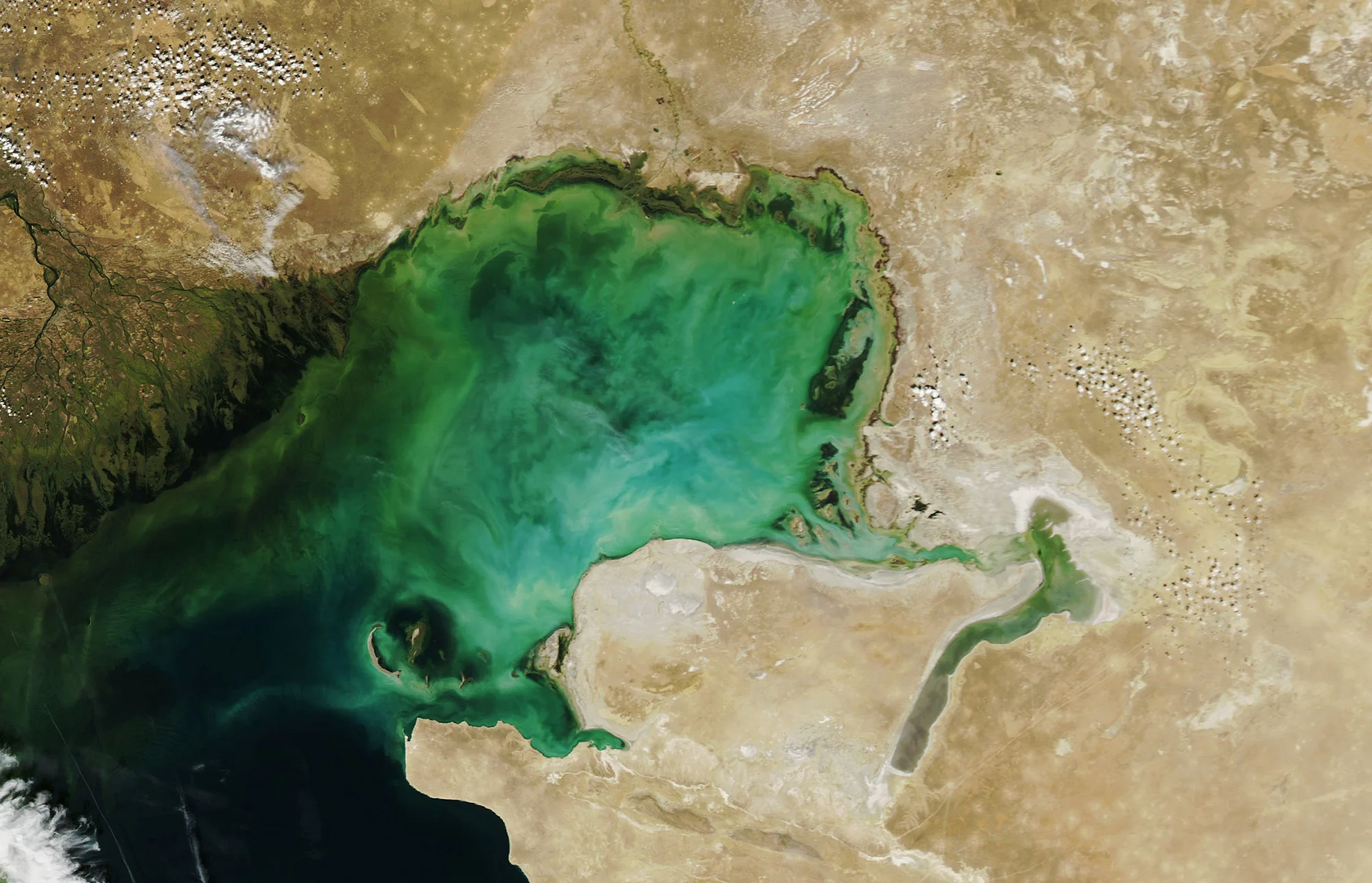
The Caspian Sea, located on the border between Europe and Asia, is the world's largest enclosed water body (Figure 1). It extends approximately for 1,030 km from north to south with a width in different locations from 200 to 400 km (Kosarev, 1975, 2005; Terziev, 1992; Nesterov, 2016). The sea is usually divided into the Northern Caspian, which is a shallow area with sea depths less than 20 m, the Middle Caspian with a maximum depth of 788 m, and the Southern Caspian with a maximum depth of 1025 m (Kosarev, 1975, 2005; Terziev, 1992). The sea has the Kara-Bogaz-Gol Bay on the eastern part of the Middle Caspian, which is separated from the sea by two sandy spits (Figure 1). This is one of the largest hypersaline reservoirs on Earth with salinity ranging from 270 to 300 g/L (Kosarev and Kostianoy, 2005; Kosarev et al., 2009). Today, with a sea level of about -29 m, the areas of the sea and the bay, according to Nesterov (2016) and Lahijani et al. (2023) are approximately 357,000 km2 and 17,000 km2, respectively.
The meridional elongation of the Caspian Sea for more than one thousand km and the correspondingly wide range of climatic conditions, when, in winter, the Northern Caspian freezes every year and the Southern Caspian never freezes, determine its biological diversity. The Caspian Sea is home to 147 species of fish, 450 species or forms of plankton, 87 species of algae and 315 species of zooplankton. In addition, 331 endemic species have been identified in the Caspian Sea, including 54 species of fish and Caspian Seal. The Caspian Sea holds more than 90% of the world's sturgeon (Beluga, Russian sturgeon, Persian sturgeon, Stellate sturgeon and Thornfish) stocks (Ginzburg et al., 2024).
The Caspian Sea represents the vastest inland catchment in Eurasia (Fig. 1), which covers the major industrial regions of Russia and Caucasus and suffers an increasing anthropogenic impact (Kosarev and Yablonskaya, 1994; Kostianoy and Kosarev, 2005; Zonn et al., 2010). It washes the shores of Russia, Kazakhstan, Turkmenistan, Iran, and Azerbaijan. The main sources of pollution of the Caspian environment are transborder atmospheric and water transfer of pollutants from other regions, washing off with river flows, discharge of untreated industrial and agricultural wastewaters, municipal– domestic wastewaters from cities and settlements in the coastal zone due to the insufficient number of treatment facilities, oil and gas exploration and production on land and offshore, oil transportation via sea, river and sea navigation, secondary pollution during bottom dredging operations and a fast sea level rise for 2.5 m from 1977 to 1995 (Kostianoy, 2011).
Fifteen years ago, we wrote that: “The Caspian Sea is currently undergoing increasing anthropogenic pressure: there is an increase of eutrophication, water pollution by oil, heavy metals, chemicals and overexploitation of the Caspian biota. Main sources of the Caspian Sea pollution are: river run-off; industrial and municipal waste waters; offshore and onshore oil production; oil transportation; and flooded coastal zone due to sea level rise. Intensive oil and gas development in the Caspian region resulted in extensive water, land and air pollution, wildlife and plant degradation, exhaustion of natural resources, ecosystem disturbance, desertification and considerable losses in biological and landscape diversity.” (Kostianoy, 2011).
But since 1995, we observe a decline of the Caspian Sea level with an average rate of 10 cm/year, which is accompanied by a notable regional climate change resulted in air and sea surface temperature increase, a decrease of sea ice cover, an increase in evaporation (Chen et al., 2017; Serykh, Kostianoy, 2020; Ginznurg et al., 2021). By the end of 2020, the Caspian Sea level reached -28.5 m, and was only 0.5 m away from the 1977 minimum of -29.0 m (the minimum over the past 400-500 years). According to satellite altimetry data, the Caspian Sea level continued to decline at a rate of 25-35 cm per year, for example, from September 18, 2022 to September 17, 2023, it dropped by another 35 cm, and in February 2024 reached -29.1 m, which is confirmed by data from the Baku gauge station in Azerbaijan, where the sea level dropped to -29.4 m in winter 2024, and data from the Makhachkala gauge station in Russia (-29.3 m in March 2024) (Kostianoy, 2024). From September 17, 2023 to September 16, 2024, sea level dropped by another 9 cm (Figure 2). In winter 2024/2025, the Caspian Sea level will probably drop to -29.5 m. It should be noted that the level of the Caspian Sea according to satellite altimeters is overestimated by approximately 40-50 cm due to inaccurate reference of satellite data to gauge stations (see Figure 2).
A dramatic sea level decline in the Caspian Sea related to strong regional climate change is the main concern for the Caspian Sea environment now. In these conditions, oil pollution, desertification and land degradation, ecological issues, biological inviders, etc. fades into the background. V ery pessimistic forecasts of sea level change, which predict a further 9-18 m drop by the end of the century, could lead to colossal environmental issues, loss of biodiversity and serious socio-economic problems in the Caspian Sea region (Prange et al., 2020; Nandini-Weiss et al., 2020). With a sea level drop of 9 or 18 m, the Caspian Sea surface will decrease by 23 or 34%, mainly due to the shallowing of the entire Northern Caspian (Prange et al., 2020).
Today, the most important task for the countries of the Caspian region is to develop a reliable forecast of sea level changes, on which both the state of the environment and the socio-economic development of the entire region depend. It is for this reason that this issue has already reached the level of presidents and governments of all Caspian states. To solve this problem, international cooperation of leading experts in the field of regional climate change and the Caspian Sea will be required.
International collaboration
Since the desintegration of the USSR in 1991, the five Caspian Sea countries have shown increased interest in joint cooperation for the protection of the Caspian Sea. The Coordinating Committee on Hydrometeorology and Pollution Monitoring of the Caspian Sea (CASPCOM) was established in 1994 by the National Hydrometeorological Agencies of the Caspian states (Azerbaijan, Iran, Kazakhstan, Russia and Turkmenistan) with the support of the World Meteorological Organization (WMO). The Charter, approved by the parties in the same 1994, states that CASPCOM was created for the purpose of coordination, standardization, cooperation and improvement in the field of hydrometeorology and pollution monitoring of the Caspian Sea. The Charter also defines the main priority areas of CASPCOM activities, including: (1) coordination of the activities of national hydrometeorological services in the implementation of integrated regional programs of coastal states on the hydrometeorology of the Caspian Sea in cooperation with international organizations; (2) joint actions to train specialists, conduct research, conferences, meetings and seminars on hydrometeorology and pollution monitoring of the Caspian Sea. In 1997, CASPCOM adopted the Integrated Programme on Hydrometeorology and Monitoring of Environment in the Caspian Sea Region (CASPAS), prepared with the support of WMO, which was designed to facilitate the creation of a regional monitoring and information exchange system (CASPCOM, 2024).
In 1998, the Caspian Environment Programme (CEP) was established as a regional umbrella programme with the aim to halt the deterioration of environmental conditions of the Caspian Sea and to promote sustainable development in the region for the long-term benefit of the Caspian population. Since its establishment, the CEP has addressed numerous environmental issues, developing a coordinated management structure, regional and national action plans and various transnational measures to combat the emerging threats facing the Caspian environment. The CEP has provided the basis for the efforts of the Caspian States to negotiate and finalize the Tehran Convention (Tehran Convention, 2024).
The Framework Convention for the Protection of the Marine Environment of the Caspian Sea, also known as the Tehran Convention was adopted in 2003. It is the first legally binding regional agreement signed by all five Caspian littoral states, the Republic of Azerbaijan, the Islamic Republic of Iran, the Republic of Kazakhstan, the Russian Federation and Turkmenistan. It establishes general requirements and an institutional mechanism for environmental protection in the Caspian region. The Tehran Convention is a comprehensive legal instrument that aims not only to protect the Caspian Sea environment from all sources of pollution, but also to conserve, restore and protect the species and habitats of the Caspian Sea (Tehran Convention, 2024).
In May 2018, the International Working Group on Sustainable Development of the Caspian Sea Region – CASPISNET (Caspian Integrated Scientific Network) was established in Baku (Azerbaijan). The multidisciplinary group of scientists from Azerbaijan, Russia, Iran, Kazakhstan and Turkmenistan was joined in May 2018 by experts from France, Germany, Italy, Switzerland, Turkey, USA, Australia, Chile, South Korea, Pakistan and Uzbekistan at a special meeting initiated by the Institute of Geography of the National Academy of Sciences of Azerbaijan during the international conference “Understanding the Problems of Inland Waters: Case Study for the Caspian Sea”, held in Baku on 12- 14 May 2018. CASPISNET members have expertise in earth sciences, natural and applied sciences, remote sensing, GIS technologies, social sciences, water resources management, climate change, agriculture, biodiversity, marine biology and fisheries, coastal urban planning and development, territorial development, water diplomacy, sea level, marine geophysics, geology, thermodynamics, archeology, international transport, environmental pollution and many other disciplines related to the development of the Caspian region. The development of the CASPISNET project takes place within the framework of periodic conferences and meetings held in Baku and remotely, negotiations with interested international, public and private organizations, trainings of young scientists in various disciplines of environmental sciences.
P.P. Shirshov Institute of Oceanology (Moscow, Russia) has been cooperating with all Caspian littoral countries since the early 2000s within the framework of various national and international projects. We have just completed the project "Hydrophysical regime, ecological state and quality of coastal zone waters in the Kazakhstan sector of the Caspian Sea", which was carried out from 2022 to 2024 jointly with Khoja Ahmed Yasawi International Kazakh-Turkish University (Turkestan, Kazakhstan). Currently, research is being carried out jointly with Sh. Yessenov Caspian University of Technology and Engineering (Aktau, Kazakhstan) on three projects: "Satellite monitoring of the water areas of the Aktau and Kuryk ports"; "Sustainable development of natural-economic and socio-economic systems of the West Kazakhstan region in the context of green growth: Comprehensive analysis, concept, forecast assessments and scenarios"; and "Study of the ecological state and dynamics of waters in the Kazakhstan sector of the Northern Caspian".
P.P. Shirshov Institute of Oceanology is the lead organization in the international project “The Caspian Sea Digital Twin”. This project was included in the Implementation plan for the UN Decade of Ocean Science for Sustainable Development (2021-2030) as a result of the First Call to action announced in October 2020 by the Intergovernmental Oceanographic Commission of UNESCO, which coordinates, on behalf of the UN, all activities for the Decade (Kostianoy, 2024). The goal of the “The Caspian Sea Digital Twin” Project is to create a “Data Center for the Caspian Sea”, which will include an updated archive of satellite data (IR, optics, radar, altimetry), oceanographic data (physical, chemical, biological parameters), hydrometeorological data, results of hydrodynamic models, atmospheric reanalysis data, results of regional climate change forecasts, electronic atlases, electronic library of publications on the Caspian Sea and other materials. The created infrastructure will make it possible to assess the anthropogenic load on the environment of the Caspian Sea, ongoing climate changes, extreme weather and climate events, and the impact of climate change on natural and socio-economic systems. It will support the ministries and departments of both the Russian Federation and other Caspian littoral countries with modern information resources, and will facilitate the adoption of state and interstate decisions in the development of strategies and mechanisms for adaptation to climate change and the creation of improved conditions for the sustainable development of the Caspian Sea region. The consortium includes 24 teams from 23 organizations from 6 countries (Russia, Azerbaijan, Kazakhstan, Iran, France and Switzerland). Project duration is planned from 2022 to 2030 (Kostianoy, 2024).
In collaboration between P.P. Shirshov Institute of Oceanology with Tarbiat Modares University (Iran), the following studies were conducted: (1) wind regime over the Caspian Sea and wind energy potential for the construction of offshore wind farms; (2) spatio-temporal variability of bio-optical properties of the Southern Caspian waters; (3) spatial planning of marine protected areas in the Southern Caspian; (4) modeling the spread of the invasive species Mnemiopsis leidyi in the Southern Caspian using satellite data; (5) changes in bio-optical characteristics of seawater in the Southern Caspian basin caused by quarantine measures due to the COVID-19 pandemic. Currently, these works are being carried out within the framework of a joint grant of the Russian Science Foundation and the Iranian National Science Foundation “Spatial Planning and Satellite Monitoring of Marine Protected Areas in the Caspian Sea» (2024-2026). In addition, within the framework of the cooperation of these funds, another scientific project is being carried out at the P.P. Shirshov Institute of Oceanology: “Biotic and abiotic zones of microplastic retention in the river-sea contact area.”
The results of the work obtained on several of the above mentioned projects by scientists from Russia, Kazakhstan and Iran are presented in this special issue of the Ecologica Montenegrina.
The special issue, entitled "Advances in Environmental Monitoring of the Caspian Sea", includes a collection of studies that advance our understanding of the Caspian Sea through the application of various environmental monitoring methods. The contributions in this special issue not only shed light on the environmental problems facing the Caspian Sea, but also emphasize the importance of interdisciplinary approaches and constant improvement of methods aimed at obtaining reliable and timely environmental data of this unique ecosystem.
In this Special Issue, various environmental monitoring techniques are explored through several studies (Bocharov et al., 2024: Lavrova et al., 2024; Gholamalifard et al., 2024), providing insights into the ecological health of Caspian Sea and its inhabitants. For example, the incorporation of remote sensing techniques into environmental monitoring has improved our understanding of ecological conditions and potential risks to the Caspian Sea ecosystem. A study by Gholamalifard et al. (2024) highlights the match between in-situ and satellite data on key bio-optical components (ie., absorption of colored dissolved organic matter, chlorophyll-a concentration and turbidity). The obtained results emphasize the use of satellite imagery in regular environmental monitoring of the Caspian Sea, and on the other hand, the importance of maintaining in-situ research. Finally, the use of in-situ data allows fine calibration of satellite data. For example, in the study by Bocharov et al. (2024) in-situ measurements of sea surface temperature (SST) were used to calibrate the satellite data. These results, as the latter study showed, recommended the use of SST data obtained from the Landsat Level-2 product with a correction of + 1°C. The study by Lavrova et al. (2024) provides a comprehensive overview of new algorithms and techniques developed during the past decade for correct retrieval of sea surface temperature, water turbidity, suspended particulate matter concentration, as well as determination of ice cover, river plumes, and wind surge areas based first of all on Ocean Color Data: MSI Sentinel-2A, -2B; OLI/TIRS Landsat-8 and OLI-2/TIRS-2 Landsat-9. All these algorithms are implemented in the specialized information-analytical system “See the Caspian Sea” (STCS), intendedfor collecting, analysis and visualization of satellite and meteorological data for the Caspian Sea region.
Several studies (Kostianoy et al. 2024; Mityagina & Kostianoy, 2024; Lavrova et al. 2024) in this special issue have shown the usefulness of satellite data in identifying areas that are polluted by oil or are at risk of contamination. For instance, in the study of Mityagina & Kostianoy (2024), long-term data series from satellite with synthetic aperture radars (SAR) and satellite multispectral optical sensors obtained during a five-year (2017-2021) observation period were used to identify regions of the Caspian Sea with the the heaviest surface pollution. The latter study showed the existence of significant seasonal variability in the distribution of natural oil films in the areas of oil seepage from the seabed, as well as the influence of eddy dynamics on the spread of oil films as well as on the trans- shelf transfer of oil pollution. Further, algal bloom studies (Lavrova et al. 2024) highlight the importance of satellite monitoring, especially in monitoring anomalous blooms of phytoplankton (primarily cyanobacteria) in the South Caspian Sea. While numerous studies point to various possible triggers for algal blooms, such as high sea and air surface temperatures, low wind speed, high Chl-a concentrations in periods preceding phytoplankton bloom development, atmospheric precipitation, and even sandstorms, research by Lavrova et al. (2024) has shown, however, that for the South Caspian Sea there is no clear correlation with any of the above factors.
Some ecological studies (Sapozhnikov et al., 2024; Ginzburg et al., 2024) have explored the interactions between a community of species and the environment, revealing their bioindication potential, reflecting the adaptive nature of many of these assemblages to different environmental conditions, such as those on artificial plastic substrates. The study conducted by Sapozhnikov et al. (2024) showed that phytoperiphyton formed on the surface of nylon halyards is characterized by significant species richness and diversity of life forms. Significant progress in the research of water quality, especially in southwestern Kazakhstan (Aktau region) are presented in articles by Syrlybekkyzy et al. (2024) and Janaliyeva et al. (2024), respectively, showcasing the importance of long-term monitoring data. Access to accurate and up-to-date monitoring data, as emphasized in the study by Janaliyeva et al. (2024), enable policy makers and end users to make recommendations for sustainable resource management and use of coastal zones and water areas. Research on key seawater quality indicators of the Southern Caspian Sea during the COVID-19 pandemic complements these insights by demonstrating the positive impact of reduced human activities on marine ecosystems (Ahmadi et al., 2024). Finally, the continuous improvement of existing environmental monitoring databases imposes the need to redefine the ecologically and biologically significant marine protected areas within the Caspian Sea ecosystem in order to better understand the intricate interactions of these habitats with global changes related primarily to the continued decline in the Caspian Sea level (Ginzburg et al., 2024). Such research is necessary to understand the changes facing the Caspian Sea ecosystem and its inhabitants, which will require improvements and possibly the application of new environmental monitoring techniques.
All articles in this special issue promote our knowledge in the entire spectrum of environmental monitoring of the Caspian Sea, from the development and improvement of various monitoring techniques to the successful implementation of the obtained data in the conservation projects of this unique ecosystem. An interdisciplinary approach, using multiple datasets obtained by different techniques, for example, remote sensing data combined with in-situ research, sheds light in the most complete way on the full scope of environmental problems facing the Caspian Sea today.
Conclusions
Twenty five years of work on the Caspian Sea environment and wide experience of international cooperation with different riparian countries under various grants have shown that the following important gaps still exist:
1. Lack of scientific cooperation between the Caspian Sea countries on the Caspian Sea studies.
2. Lack of scientific cooperation between science and business working in the Caspian Sea.
3. Lack of integrated, multidisciplinary, intersectoral research (environmental sciences, territorial development, social sciences, policymakers, resource managers, industries, citizens). 4. A little exchange of data, information, and publications on the Caspian Sea environment.
5. Since desintergration of the USSR in 1991, there is no united system of in-situ monitoring in the Caspian Sea.
6. There is no permanent real-time integrated satellite monitoring of the Caspian Sea environment.
7. Lack of modern instrumentations (research vessels, CTDs, buoys, drifters, gliders, tide gauge stations, HF radars, meteo radars, lidars, etc) and common standards for in-situ and satellite measurements.
8. Absence of International Regional Satellite Monitoring Center.
9. Absence of International Regional Climate Change Center.
Ecologica Montenegrina, 76, 2024, 201-210 207
ENVIRONMENTAL MONITORING OF THE CASPIAN SEA
What is needed to fill these gaps? Briefly it can be summarized as: 1. Political decisions.
2. Bilateral agreements.
3. Special international cooperation programs on the Caspian Sea.
4. Administration decisions.
5. Special funding at national and international levels.
6. Standardization of in-situ and satellite remote sensing measurements.
7. Modern instrumentation.
8. Establishment of Joint International Regional Satellite Monitoring and Climate Change Center.
We belive that the present Special issue of Ecologica Montenegrina, entitled "Advances in Environmental Monitoring of the Caspian Sea", will stimulate scientists from the Caspian and other countries to conduct joint research on the current state of the Caspian Sea environment and further changes in its ecosystem due to the continuing drop in sea level. We are confident that Ecologica Montenegrina will continue to be a professional platform for the publication of new materials and the exchange of opinions and experience in the study of the Caspian Sea.
Acknowledgements
The research made by Andrey Kostianoy was done with the support of the RSF Grant N 24-44-20006 «Spatial Planning and Satellite Monitoring of Marine Protected Areas in the Caspian Sea», https://rscf.ru/en/project/24-44-20006/. We acknowledge the use of imagery from the NASA Worldview Snapshots application (https://wvs.earthdata.nasa.gov), part of the Earth Observing System Data and Information System (EOSDIS).
References
Ahmadi, B., Gholamalifard, M., Naghdi, M. & Kostianoy, A.G. (2024) Improvement of Bio-Optical Characteristics of Seawater in the Southern Caspian Sea Basin Triggered by COVID-19 Lockdowns: Insights from Remote Sensing Data. Ecologica Montenegrina, 76, 133–153. https://doi.org/10.37828/em.2024.76.8
Bocharov, A.V., Kostianoy, A.G. & Lebedev, S.A. (2024) Assessment of the accuracy of determining the Caspian Sea surface temperature by Landsat-5, -7 satellites based on the measurements of drifters. Ecologica Montenegrina, 76, 1–13. https://doi.org/10.37828/em.2024.76.1
CASPCOM (2024) http://www.caspcom.com/ Accessed on 20 December 2024.
Chen, J.L., Pekker, T., Wilson, C.R., Tapley, B.D., Kostianoy, A.G., Cretaux, J.-F. & Safarov, E.S.
(2017) Long-term Caspian Sea level change. Geophysical Research Letters, 44, 6993–7001.
https://doi.org/10.1002/2017GL073958.
Gholamalifard, M., Ahmadi, B., Naghdi, M. & Kostianoy, A.G. (2024) Monitoring of Optically Active
Constituents (OACs) in the Southern Caspian Sea: Concurrent Match-up Between In-Situ and Satellite Observations. Ecologica Montenegrina, 76, 168–186. https://doi.org/10.37828/em.2024.76.10
Ginzburg, A.I., Kostianoy, A.G., Gholamalifard, M., Koibakova, S.E. & Syrlybekkyzy, S. (2024) Ecologically and Biologically Significant Marine Protected Areas in the Caspian Sea: A Review. Ecologica Montenegrina, 76, 85–115. https://doi.org/10.37828/em.2024.76.6
Ginzburg, A.I., Kostianoy, A.G., Serykh, I.V. & Lebedev, S.A. (2021) Climatic changes in the hydrometeorological parameters of the Caspian Sea (1980–2020). Current Problems in Remote Sensing of the Earth from Space, 18 (5), 277–291.https://doi.org/10.21046/2070-7401-2021-18-5-277-291
Janaliyeva, N., Serikbayeva, A., Syrlybekkyzy, S., Suleimenova, B., Baimukasheva, S., Dzumasheva, K. & Lezzat, Y. (2024) Interannual Variability of Heavy Metal Pollution in the Aktau Region of Kazakhstan. Ecologica Montenegrina, 76, 187–200.https://doi.org/10.37828/em.2024.76.11
Kosarev, A.N. (1975) Hydrology of the Caspian and Aral Seas. Moscow: Moscow State University Publishing House, 272 pp. (In Russian)
Kosarev, A.N. (2005) Physico-Geographical Conditions of the Caspian Sea. In: Kostianoy A. & Kosarev A. (Eds), The Caspian Sea Environment. The Handbook of Environmental Chemistry, vol 5P, Springer, Berlin, Heidelberg, pp. 5–31. https://doi.org/10.1007/698_5_002
Kosarev, A.N. & Kostianoy, A.G. (2005) Kara-Bogaz-Gol Bay. In: Kostianoy A. & Kosarev A. (Eds), The Caspian Sea Environment. The Handbook of Environmental Chemistry, vol 5P, Springer, Berlin, Heidelberg, pp. 211–221. https://doi.org/10.1007/698_5_011
Kosarev, A.N., Kostianoy, A.G. & Zonn, I.S. (2009) Kara-Bogaz-Gol Bay: Physical and Chemical Evolution. Aquatic Geochemistry, 15 (1-2), Special Issue: Saline Lakes and Global Change, 223–236. https://doi.org/10.1007/s10498-008-9054-z
Kosarev, A.N. & Yablonskaya, E.A. (1994) The Caspian Sea. SPB Academic Publishing, The Hague, 259 pp.
Kostianoy, A.G. (2011) Environmental problems of the Caspian Sea. Izvestiya National Acad. Sci. of Azerbaijan (Proc. Azerbaijan Acad. Sci, Earth Sciences), 2, 42–55.
Kostianoy, A.G. (2024) Research of the Caspian Sea in the framework of the International Project “The Caspian Sea Digital Twin”. Journal of Oceanological Research, 52 (2), 234–255. https://doi.org/10.29006/1564-2291.JOR-2024.52(2).12
Kostianoy, A.G., Knyazev, N.A., Lavrova, O.Y., Koibakova, S. E. & Syrlybekkyzy, S. (2024) Oil pollution near the ports of Aktau, Kuryk and Ersai (the Caspian Sea): Satellite and in-situ data. Ecologica Montenegrina, 76, 63–76. https://doi.org/10.37828/em.2024.76.4
Kostianoy, A.G. & Kosarev, A.N. (Eds) (2005) The Caspian Sea Environment. The Handbook of Environmental Chemistry. Vol. 5: Water Pollution, Part 5P. Springer-Verlag, Berlin, Heidelberg, New York, 271 p.
Lahijani, H., Leroy, S.A.G., Arpe, K. & Cretaux J.-F. (2023) Caspian Sea level changes during instrumental period, its impact and forecast: A review. Earth Science Reviews, 241 104428. https://doi.org/10.1016/j.earscirev.2023.104428
Lavrova, O.Y., Kostianoy, A.G., Bocharova, T.Y. & Strochkov, A.Y. (2024) Spatio-Temporal Variability of Algal Bloom in the Caspian Sea. Ecologica Montenegrina, 76, 14–48. https://doi.org/10.37828/em.2024.76.2
Lavrova, O.Y., Zhadanova, P.D., Kostianoy, A.G., Kashnitskii, A.V. & Knyazev, N.A. (2024) Adaptation of Satellite Remote Sensing Algorithms for Retrieval of Environmental Parameters in the Caspian Sea. Ecologica Montenegrina, 76, 116–132.https://doi.org/10.37828/em.2024.76.7
Mityagina, M. I., & Kostianoy, A. G. (2024). Areas of Heavy Permanent Oil Pollution of the Caspian Sea Surface Identified by Use of Satellite Remote Sensing. Ecologica Montenegrina, 76, 49– 62. https://doi.org/10.37828/em.2024.76.3
Nandini-Weiss, S. D., Prange, M., Arpe, K., Merkel, U. & Schulz, M. (2020) Past and future impact of the winter North Atlantic Oscillation in the Caspian Sea catchment area. International Journal of Climatology, 40, 2717–2731. https://doi.org/10.1002/joc.6362
Nesterov, E.S. (Ed.) (2016) Water Balance and Fluctuations in the Level of the Caspian Sea. Modeling and Forecasting. Triada Ltd, Moscow, 378 pp. (In Russian)
Prange, M., Wilke, T. & Wesselingh, F.P. (2020) The other side of sea level change. Communications Earth & Environment, 1, 69. https://doi.org/10.1038/s43247-020-00075-6
Sapozhnikov, P.V., Kostianoy, A.G., Zavialov, P.O., Andrulionis, N.Y., Zavialov, I.B., Koibakova, S.E., Syrlybekkyzy, S. & Kurbaniyazov, A.K. (2024) Species assemblages and spatial organization of phytoperiphyton on the surface of nylon halyards in the Eastern Caspian (Aktau Region, Kazakhstan). Ecologica Montenegrina, 76, 154–167. https://doi.org/10.37828/em.2024.76.9
Serykh, I.V. & Kostianoy, A.G. (2020) The links of climate change in the Caspian Sea to the Atlantic and Pacific Oceans. Russian Meteorology and Hydrology, 45 (6), 430–437. https://doi.org/10.3103/S1068373920060060
Syrlybekkyzy, S., Serikbayeva, A., Suleimenova, B., Makhambetov, M., Issengaliyeva, G., Dzhumasheva, K. & Dosymbekova, G. (2024) Study of Groundwater Characteristics in Aktau (Kazakhstan) During Joint Desalination and Decontamination Experiment.Ecologica Montenegrina, 76, 77–84. https://doi.org/10.37828/em.2024.76.5
Tehran Convention (2024) https://tehranconvention.org/en/tc/about Accessed on 20 December 2024. Terziev, S.F. (Ed.) (1992) Hydrometeorology and Hydrochemistry of the Seas. Vol. 6. The Caspian Sea. Issue 1. Hydrometeorological conditions. Gidrometeoizdat, St. Petersburg, 360 pp. (In Russian)
Zonn, I.S., Kostianoy, A.G., Kosarev, A.N. & Glantz, M. (2010) The Caspian Sea Encyclopedia.
Springer-Verlag, Berlin, Heidelberg, New York, 527 pp.
The paper provides a brief overview of 11 papers published in the Special Issue of Ecologica Montenegrina entitled "Advances in Environmental Monitoring of the Caspian Sea". These papers are devoted to different aspects of environmental issues of the Caspian Sea from regional climate change and dramatic sea level decline to oil pollution and algal bloom among the others. Special attention is paid to the ecologically and biologically significant marine protected areas in the Caspian Sea and the need to organize Marine Protected Areas in the region. The contributions in this special issue not only shed light on the environmental problems facing the Caspian Sea, but also emphasize the importance of interdisciplinary approaches and constant improvement of methods aimed at obtaining reliable and timely environmental data of this unique ecosystem. A combination of satellite remote sensing methods with in-situ measurements allows to improve a quality of remote sensing data via calibration and elaboration of regional algorithms. From the other side, this will improve a quality of satellite monitoring of the ecological state of whole area of the Caspian Sea which is of vital importance during a continuous decline of the sea level. The presented results further evidence the need for continuous satellite monitoring of areas subjected to ecological risks in the Caspian Sea.
Keywords: the Caspian Sea, Marine Protected Areas, environmental monitoring, satellite monitoring, sea surface oil pollution, ecological risks, sea level decline, regional climate change, algal bloom.
Introduction
The Caspian Sea, located on the border between Europe and Asia, is the world's largest enclosed water body (Figure 1). It extends approximately for 1,030 km from north to south with a width in different locations from 200 to 400 km (Kosarev, 1975, 2005; Terziev, 1992; Nesterov, 2016). The sea is usually divided into the Northern Caspian, which is a shallow area with sea depths less than 20 m, the Middle Caspian with a maximum depth of 788 m, and the Southern Caspian with a maximum depth of 1025 m (Kosarev, 1975, 2005; Terziev, 1992). The sea has the Kara-Bogaz-Gol Bay on the eastern part of the Middle Caspian, which is separated from the sea by two sandy spits (Figure 1). This is one of the largest hypersaline reservoirs on Earth with salinity ranging from 270 to 300 g/L (Kosarev and Kostianoy, 2005; Kosarev et al., 2009). Today, with a sea level of about -29 m, the areas of the sea and the bay, according to Nesterov (2016) and Lahijani et al. (2023) are approximately 357,000 km2 and 17,000 km2, respectively.
The meridional elongation of the Caspian Sea for more than one thousand km and the correspondingly wide range of climatic conditions, when, in winter, the Northern Caspian freezes every year and the Southern Caspian never freezes, determine its biological diversity. The Caspian Sea is home to 147 species of fish, 450 species or forms of plankton, 87 species of algae and 315 species of zooplankton. In addition, 331 endemic species have been identified in the Caspian Sea, including 54 species of fish and Caspian Seal. The Caspian Sea holds more than 90% of the world's sturgeon (Beluga, Russian sturgeon, Persian sturgeon, Stellate sturgeon and Thornfish) stocks (Ginzburg et al., 2024).
The Caspian Sea represents the vastest inland catchment in Eurasia (Fig. 1), which covers the major industrial regions of Russia and Caucasus and suffers an increasing anthropogenic impact (Kosarev and Yablonskaya, 1994; Kostianoy and Kosarev, 2005; Zonn et al., 2010). It washes the shores of Russia, Kazakhstan, Turkmenistan, Iran, and Azerbaijan. The main sources of pollution of the Caspian environment are transborder atmospheric and water transfer of pollutants from other regions, washing off with river flows, discharge of untreated industrial and agricultural wastewaters, municipal– domestic wastewaters from cities and settlements in the coastal zone due to the insufficient number of treatment facilities, oil and gas exploration and production on land and offshore, oil transportation via sea, river and sea navigation, secondary pollution during bottom dredging operations and a fast sea level rise for 2.5 m from 1977 to 1995 (Kostianoy, 2011).
Fifteen years ago, we wrote that: “The Caspian Sea is currently undergoing increasing anthropogenic pressure: there is an increase of eutrophication, water pollution by oil, heavy metals, chemicals and overexploitation of the Caspian biota. Main sources of the Caspian Sea pollution are: river run-off; industrial and municipal waste waters; offshore and onshore oil production; oil transportation; and flooded coastal zone due to sea level rise. Intensive oil and gas development in the Caspian region resulted in extensive water, land and air pollution, wildlife and plant degradation, exhaustion of natural resources, ecosystem disturbance, desertification and considerable losses in biological and landscape diversity.” (Kostianoy, 2011).
But since 1995, we observe a decline of the Caspian Sea level with an average rate of 10 cm/year, which is accompanied by a notable regional climate change resulted in air and sea surface temperature increase, a decrease of sea ice cover, an increase in evaporation (Chen et al., 2017; Serykh, Kostianoy, 2020; Ginznurg et al., 2021). By the end of 2020, the Caspian Sea level reached -28.5 m, and was only 0.5 m away from the 1977 minimum of -29.0 m (the minimum over the past 400-500 years). According to satellite altimetry data, the Caspian Sea level continued to decline at a rate of 25-35 cm per year, for example, from September 18, 2022 to September 17, 2023, it dropped by another 35 cm, and in February 2024 reached -29.1 m, which is confirmed by data from the Baku gauge station in Azerbaijan, where the sea level dropped to -29.4 m in winter 2024, and data from the Makhachkala gauge station in Russia (-29.3 m in March 2024) (Kostianoy, 2024). From September 17, 2023 to September 16, 2024, sea level dropped by another 9 cm (Figure 2). In winter 2024/2025, the Caspian Sea level will probably drop to -29.5 m. It should be noted that the level of the Caspian Sea according to satellite altimeters is overestimated by approximately 40-50 cm due to inaccurate reference of satellite data to gauge stations (see Figure 2).
A dramatic sea level decline in the Caspian Sea related to strong regional climate change is the main concern for the Caspian Sea environment now. In these conditions, oil pollution, desertification and land degradation, ecological issues, biological inviders, etc. fades into the background. V ery pessimistic forecasts of sea level change, which predict a further 9-18 m drop by the end of the century, could lead to colossal environmental issues, loss of biodiversity and serious socio-economic problems in the Caspian Sea region (Prange et al., 2020; Nandini-Weiss et al., 2020). With a sea level drop of 9 or 18 m, the Caspian Sea surface will decrease by 23 or 34%, mainly due to the shallowing of the entire Northern Caspian (Prange et al., 2020).
Today, the most important task for the countries of the Caspian region is to develop a reliable forecast of sea level changes, on which both the state of the environment and the socio-economic development of the entire region depend. It is for this reason that this issue has already reached the level of presidents and governments of all Caspian states. To solve this problem, international cooperation of leading experts in the field of regional climate change and the Caspian Sea will be required.
International collaboration
Since the desintegration of the USSR in 1991, the five Caspian Sea countries have shown increased interest in joint cooperation for the protection of the Caspian Sea. The Coordinating Committee on Hydrometeorology and Pollution Monitoring of the Caspian Sea (CASPCOM) was established in 1994 by the National Hydrometeorological Agencies of the Caspian states (Azerbaijan, Iran, Kazakhstan, Russia and Turkmenistan) with the support of the World Meteorological Organization (WMO). The Charter, approved by the parties in the same 1994, states that CASPCOM was created for the purpose of coordination, standardization, cooperation and improvement in the field of hydrometeorology and pollution monitoring of the Caspian Sea. The Charter also defines the main priority areas of CASPCOM activities, including: (1) coordination of the activities of national hydrometeorological services in the implementation of integrated regional programs of coastal states on the hydrometeorology of the Caspian Sea in cooperation with international organizations; (2) joint actions to train specialists, conduct research, conferences, meetings and seminars on hydrometeorology and pollution monitoring of the Caspian Sea. In 1997, CASPCOM adopted the Integrated Programme on Hydrometeorology and Monitoring of Environment in the Caspian Sea Region (CASPAS), prepared with the support of WMO, which was designed to facilitate the creation of a regional monitoring and information exchange system (CASPCOM, 2024).
In 1998, the Caspian Environment Programme (CEP) was established as a regional umbrella programme with the aim to halt the deterioration of environmental conditions of the Caspian Sea and to promote sustainable development in the region for the long-term benefit of the Caspian population. Since its establishment, the CEP has addressed numerous environmental issues, developing a coordinated management structure, regional and national action plans and various transnational measures to combat the emerging threats facing the Caspian environment. The CEP has provided the basis for the efforts of the Caspian States to negotiate and finalize the Tehran Convention (Tehran Convention, 2024).
The Framework Convention for the Protection of the Marine Environment of the Caspian Sea, also known as the Tehran Convention was adopted in 2003. It is the first legally binding regional agreement signed by all five Caspian littoral states, the Republic of Azerbaijan, the Islamic Republic of Iran, the Republic of Kazakhstan, the Russian Federation and Turkmenistan. It establishes general requirements and an institutional mechanism for environmental protection in the Caspian region. The Tehran Convention is a comprehensive legal instrument that aims not only to protect the Caspian Sea environment from all sources of pollution, but also to conserve, restore and protect the species and habitats of the Caspian Sea (Tehran Convention, 2024).
In May 2018, the International Working Group on Sustainable Development of the Caspian Sea Region – CASPISNET (Caspian Integrated Scientific Network) was established in Baku (Azerbaijan). The multidisciplinary group of scientists from Azerbaijan, Russia, Iran, Kazakhstan and Turkmenistan was joined in May 2018 by experts from France, Germany, Italy, Switzerland, Turkey, USA, Australia, Chile, South Korea, Pakistan and Uzbekistan at a special meeting initiated by the Institute of Geography of the National Academy of Sciences of Azerbaijan during the international conference “Understanding the Problems of Inland Waters: Case Study for the Caspian Sea”, held in Baku on 12- 14 May 2018. CASPISNET members have expertise in earth sciences, natural and applied sciences, remote sensing, GIS technologies, social sciences, water resources management, climate change, agriculture, biodiversity, marine biology and fisheries, coastal urban planning and development, territorial development, water diplomacy, sea level, marine geophysics, geology, thermodynamics, archeology, international transport, environmental pollution and many other disciplines related to the development of the Caspian region. The development of the CASPISNET project takes place within the framework of periodic conferences and meetings held in Baku and remotely, negotiations with interested international, public and private organizations, trainings of young scientists in various disciplines of environmental sciences.
P.P. Shirshov Institute of Oceanology (Moscow, Russia) has been cooperating with all Caspian littoral countries since the early 2000s within the framework of various national and international projects. We have just completed the project "Hydrophysical regime, ecological state and quality of coastal zone waters in the Kazakhstan sector of the Caspian Sea", which was carried out from 2022 to 2024 jointly with Khoja Ahmed Yasawi International Kazakh-Turkish University (Turkestan, Kazakhstan). Currently, research is being carried out jointly with Sh. Yessenov Caspian University of Technology and Engineering (Aktau, Kazakhstan) on three projects: "Satellite monitoring of the water areas of the Aktau and Kuryk ports"; "Sustainable development of natural-economic and socio-economic systems of the West Kazakhstan region in the context of green growth: Comprehensive analysis, concept, forecast assessments and scenarios"; and "Study of the ecological state and dynamics of waters in the Kazakhstan sector of the Northern Caspian".
P.P. Shirshov Institute of Oceanology is the lead organization in the international project “The Caspian Sea Digital Twin”. This project was included in the Implementation plan for the UN Decade of Ocean Science for Sustainable Development (2021-2030) as a result of the First Call to action announced in October 2020 by the Intergovernmental Oceanographic Commission of UNESCO, which coordinates, on behalf of the UN, all activities for the Decade (Kostianoy, 2024). The goal of the “The Caspian Sea Digital Twin” Project is to create a “Data Center for the Caspian Sea”, which will include an updated archive of satellite data (IR, optics, radar, altimetry), oceanographic data (physical, chemical, biological parameters), hydrometeorological data, results of hydrodynamic models, atmospheric reanalysis data, results of regional climate change forecasts, electronic atlases, electronic library of publications on the Caspian Sea and other materials. The created infrastructure will make it possible to assess the anthropogenic load on the environment of the Caspian Sea, ongoing climate changes, extreme weather and climate events, and the impact of climate change on natural and socio-economic systems. It will support the ministries and departments of both the Russian Federation and other Caspian littoral countries with modern information resources, and will facilitate the adoption of state and interstate decisions in the development of strategies and mechanisms for adaptation to climate change and the creation of improved conditions for the sustainable development of the Caspian Sea region. The consortium includes 24 teams from 23 organizations from 6 countries (Russia, Azerbaijan, Kazakhstan, Iran, France and Switzerland). Project duration is planned from 2022 to 2030 (Kostianoy, 2024).
In collaboration between P.P. Shirshov Institute of Oceanology with Tarbiat Modares University (Iran), the following studies were conducted: (1) wind regime over the Caspian Sea and wind energy potential for the construction of offshore wind farms; (2) spatio-temporal variability of bio-optical properties of the Southern Caspian waters; (3) spatial planning of marine protected areas in the Southern Caspian; (4) modeling the spread of the invasive species Mnemiopsis leidyi in the Southern Caspian using satellite data; (5) changes in bio-optical characteristics of seawater in the Southern Caspian basin caused by quarantine measures due to the COVID-19 pandemic. Currently, these works are being carried out within the framework of a joint grant of the Russian Science Foundation and the Iranian National Science Foundation “Spatial Planning and Satellite Monitoring of Marine Protected Areas in the Caspian Sea» (2024-2026). In addition, within the framework of the cooperation of these funds, another scientific project is being carried out at the P.P. Shirshov Institute of Oceanology: “Biotic and abiotic zones of microplastic retention in the river-sea contact area.”
The results of the work obtained on several of the above mentioned projects by scientists from Russia, Kazakhstan and Iran are presented in this special issue of the Ecologica Montenegrina.
The special issue, entitled "Advances in Environmental Monitoring of the Caspian Sea", includes a collection of studies that advance our understanding of the Caspian Sea through the application of various environmental monitoring methods. The contributions in this special issue not only shed light on the environmental problems facing the Caspian Sea, but also emphasize the importance of interdisciplinary approaches and constant improvement of methods aimed at obtaining reliable and timely environmental data of this unique ecosystem.
In this Special Issue, various environmental monitoring techniques are explored through several studies (Bocharov et al., 2024: Lavrova et al., 2024; Gholamalifard et al., 2024), providing insights into the ecological health of Caspian Sea and its inhabitants. For example, the incorporation of remote sensing techniques into environmental monitoring has improved our understanding of ecological conditions and potential risks to the Caspian Sea ecosystem. A study by Gholamalifard et al. (2024) highlights the match between in-situ and satellite data on key bio-optical components (ie., absorption of colored dissolved organic matter, chlorophyll-a concentration and turbidity). The obtained results emphasize the use of satellite imagery in regular environmental monitoring of the Caspian Sea, and on the other hand, the importance of maintaining in-situ research. Finally, the use of in-situ data allows fine calibration of satellite data. For example, in the study by Bocharov et al. (2024) in-situ measurements of sea surface temperature (SST) were used to calibrate the satellite data. These results, as the latter study showed, recommended the use of SST data obtained from the Landsat Level-2 product with a correction of + 1°C. The study by Lavrova et al. (2024) provides a comprehensive overview of new algorithms and techniques developed during the past decade for correct retrieval of sea surface temperature, water turbidity, suspended particulate matter concentration, as well as determination of ice cover, river plumes, and wind surge areas based first of all on Ocean Color Data: MSI Sentinel-2A, -2B; OLI/TIRS Landsat-8 and OLI-2/TIRS-2 Landsat-9. All these algorithms are implemented in the specialized information-analytical system “See the Caspian Sea” (STCS), intendedfor collecting, analysis and visualization of satellite and meteorological data for the Caspian Sea region.
Several studies (Kostianoy et al. 2024; Mityagina & Kostianoy, 2024; Lavrova et al. 2024) in this special issue have shown the usefulness of satellite data in identifying areas that are polluted by oil or are at risk of contamination. For instance, in the study of Mityagina & Kostianoy (2024), long-term data series from satellite with synthetic aperture radars (SAR) and satellite multispectral optical sensors obtained during a five-year (2017-2021) observation period were used to identify regions of the Caspian Sea with the the heaviest surface pollution. The latter study showed the existence of significant seasonal variability in the distribution of natural oil films in the areas of oil seepage from the seabed, as well as the influence of eddy dynamics on the spread of oil films as well as on the trans- shelf transfer of oil pollution. Further, algal bloom studies (Lavrova et al. 2024) highlight the importance of satellite monitoring, especially in monitoring anomalous blooms of phytoplankton (primarily cyanobacteria) in the South Caspian Sea. While numerous studies point to various possible triggers for algal blooms, such as high sea and air surface temperatures, low wind speed, high Chl-a concentrations in periods preceding phytoplankton bloom development, atmospheric precipitation, and even sandstorms, research by Lavrova et al. (2024) has shown, however, that for the South Caspian Sea there is no clear correlation with any of the above factors.
Some ecological studies (Sapozhnikov et al., 2024; Ginzburg et al., 2024) have explored the interactions between a community of species and the environment, revealing their bioindication potential, reflecting the adaptive nature of many of these assemblages to different environmental conditions, such as those on artificial plastic substrates. The study conducted by Sapozhnikov et al. (2024) showed that phytoperiphyton formed on the surface of nylon halyards is characterized by significant species richness and diversity of life forms. Significant progress in the research of water quality, especially in southwestern Kazakhstan (Aktau region) are presented in articles by Syrlybekkyzy et al. (2024) and Janaliyeva et al. (2024), respectively, showcasing the importance of long-term monitoring data. Access to accurate and up-to-date monitoring data, as emphasized in the study by Janaliyeva et al. (2024), enable policy makers and end users to make recommendations for sustainable resource management and use of coastal zones and water areas. Research on key seawater quality indicators of the Southern Caspian Sea during the COVID-19 pandemic complements these insights by demonstrating the positive impact of reduced human activities on marine ecosystems (Ahmadi et al., 2024). Finally, the continuous improvement of existing environmental monitoring databases imposes the need to redefine the ecologically and biologically significant marine protected areas within the Caspian Sea ecosystem in order to better understand the intricate interactions of these habitats with global changes related primarily to the continued decline in the Caspian Sea level (Ginzburg et al., 2024). Such research is necessary to understand the changes facing the Caspian Sea ecosystem and its inhabitants, which will require improvements and possibly the application of new environmental monitoring techniques.
All articles in this special issue promote our knowledge in the entire spectrum of environmental monitoring of the Caspian Sea, from the development and improvement of various monitoring techniques to the successful implementation of the obtained data in the conservation projects of this unique ecosystem. An interdisciplinary approach, using multiple datasets obtained by different techniques, for example, remote sensing data combined with in-situ research, sheds light in the most complete way on the full scope of environmental problems facing the Caspian Sea today.
Conclusions
Twenty five years of work on the Caspian Sea environment and wide experience of international cooperation with different riparian countries under various grants have shown that the following important gaps still exist:
1. Lack of scientific cooperation between the Caspian Sea countries on the Caspian Sea studies.
2. Lack of scientific cooperation between science and business working in the Caspian Sea.
3. Lack of integrated, multidisciplinary, intersectoral research (environmental sciences, territorial development, social sciences, policymakers, resource managers, industries, citizens). 4. A little exchange of data, information, and publications on the Caspian Sea environment.
5. Since desintergration of the USSR in 1991, there is no united system of in-situ monitoring in the Caspian Sea.
6. There is no permanent real-time integrated satellite monitoring of the Caspian Sea environment.
7. Lack of modern instrumentations (research vessels, CTDs, buoys, drifters, gliders, tide gauge stations, HF radars, meteo radars, lidars, etc) and common standards for in-situ and satellite measurements.
8. Absence of International Regional Satellite Monitoring Center.
9. Absence of International Regional Climate Change Center.
Ecologica Montenegrina, 76, 2024, 201-210 207
ENVIRONMENTAL MONITORING OF THE CASPIAN SEA
What is needed to fill these gaps? Briefly it can be summarized as: 1. Political decisions.
2. Bilateral agreements.
3. Special international cooperation programs on the Caspian Sea.
4. Administration decisions.
5. Special funding at national and international levels.
6. Standardization of in-situ and satellite remote sensing measurements.
7. Modern instrumentation.
8. Establishment of Joint International Regional Satellite Monitoring and Climate Change Center.
We belive that the present Special issue of Ecologica Montenegrina, entitled "Advances in Environmental Monitoring of the Caspian Sea", will stimulate scientists from the Caspian and other countries to conduct joint research on the current state of the Caspian Sea environment and further changes in its ecosystem due to the continuing drop in sea level. We are confident that Ecologica Montenegrina will continue to be a professional platform for the publication of new materials and the exchange of opinions and experience in the study of the Caspian Sea.
Acknowledgements
The research made by Andrey Kostianoy was done with the support of the RSF Grant N 24-44-20006 «Spatial Planning and Satellite Monitoring of Marine Protected Areas in the Caspian Sea», https://rscf.ru/en/project/24-44-20006/. We acknowledge the use of imagery from the NASA Worldview Snapshots application (https://wvs.earthdata.nasa.gov), part of the Earth Observing System Data and Information System (EOSDIS).
References
Ahmadi, B., Gholamalifard, M., Naghdi, M. & Kostianoy, A.G. (2024) Improvement of Bio-Optical Characteristics of Seawater in the Southern Caspian Sea Basin Triggered by COVID-19 Lockdowns: Insights from Remote Sensing Data. Ecologica Montenegrina, 76, 133–153. https://doi.org/10.37828/em.2024.76.8
Bocharov, A.V., Kostianoy, A.G. & Lebedev, S.A. (2024) Assessment of the accuracy of determining the Caspian Sea surface temperature by Landsat-5, -7 satellites based on the measurements of drifters. Ecologica Montenegrina, 76, 1–13. https://doi.org/10.37828/em.2024.76.1
CASPCOM (2024) http://www.caspcom.com/ Accessed on 20 December 2024.
Chen, J.L., Pekker, T., Wilson, C.R., Tapley, B.D., Kostianoy, A.G., Cretaux, J.-F. & Safarov, E.S.
(2017) Long-term Caspian Sea level change. Geophysical Research Letters, 44, 6993–7001.
https://doi.org/10.1002/2017GL073958.
Gholamalifard, M., Ahmadi, B., Naghdi, M. & Kostianoy, A.G. (2024) Monitoring of Optically Active
Constituents (OACs) in the Southern Caspian Sea: Concurrent Match-up Between In-Situ and Satellite Observations. Ecologica Montenegrina, 76, 168–186. https://doi.org/10.37828/em.2024.76.10
Ginzburg, A.I., Kostianoy, A.G., Gholamalifard, M., Koibakova, S.E. & Syrlybekkyzy, S. (2024) Ecologically and Biologically Significant Marine Protected Areas in the Caspian Sea: A Review. Ecologica Montenegrina, 76, 85–115. https://doi.org/10.37828/em.2024.76.6
Ginzburg, A.I., Kostianoy, A.G., Serykh, I.V. & Lebedev, S.A. (2021) Climatic changes in the hydrometeorological parameters of the Caspian Sea (1980–2020). Current Problems in Remote Sensing of the Earth from Space, 18 (5), 277–291.https://doi.org/10.21046/2070-7401-2021-18-5-277-291
Janaliyeva, N., Serikbayeva, A., Syrlybekkyzy, S., Suleimenova, B., Baimukasheva, S., Dzumasheva, K. & Lezzat, Y. (2024) Interannual Variability of Heavy Metal Pollution in the Aktau Region of Kazakhstan. Ecologica Montenegrina, 76, 187–200.https://doi.org/10.37828/em.2024.76.11
Kosarev, A.N. (1975) Hydrology of the Caspian and Aral Seas. Moscow: Moscow State University Publishing House, 272 pp. (In Russian)
Kosarev, A.N. (2005) Physico-Geographical Conditions of the Caspian Sea. In: Kostianoy A. & Kosarev A. (Eds), The Caspian Sea Environment. The Handbook of Environmental Chemistry, vol 5P, Springer, Berlin, Heidelberg, pp. 5–31. https://doi.org/10.1007/698_5_002
Kosarev, A.N. & Kostianoy, A.G. (2005) Kara-Bogaz-Gol Bay. In: Kostianoy A. & Kosarev A. (Eds), The Caspian Sea Environment. The Handbook of Environmental Chemistry, vol 5P, Springer, Berlin, Heidelberg, pp. 211–221. https://doi.org/10.1007/698_5_011
Kosarev, A.N., Kostianoy, A.G. & Zonn, I.S. (2009) Kara-Bogaz-Gol Bay: Physical and Chemical Evolution. Aquatic Geochemistry, 15 (1-2), Special Issue: Saline Lakes and Global Change, 223–236. https://doi.org/10.1007/s10498-008-9054-z
Kosarev, A.N. & Yablonskaya, E.A. (1994) The Caspian Sea. SPB Academic Publishing, The Hague, 259 pp.
Kostianoy, A.G. (2011) Environmental problems of the Caspian Sea. Izvestiya National Acad. Sci. of Azerbaijan (Proc. Azerbaijan Acad. Sci, Earth Sciences), 2, 42–55.
Kostianoy, A.G. (2024) Research of the Caspian Sea in the framework of the International Project “The Caspian Sea Digital Twin”. Journal of Oceanological Research, 52 (2), 234–255. https://doi.org/10.29006/1564-2291.JOR-2024.52(2).12
Kostianoy, A.G., Knyazev, N.A., Lavrova, O.Y., Koibakova, S. E. & Syrlybekkyzy, S. (2024) Oil pollution near the ports of Aktau, Kuryk and Ersai (the Caspian Sea): Satellite and in-situ data. Ecologica Montenegrina, 76, 63–76. https://doi.org/10.37828/em.2024.76.4
Kostianoy, A.G. & Kosarev, A.N. (Eds) (2005) The Caspian Sea Environment. The Handbook of Environmental Chemistry. Vol. 5: Water Pollution, Part 5P. Springer-Verlag, Berlin, Heidelberg, New York, 271 p.
Lahijani, H., Leroy, S.A.G., Arpe, K. & Cretaux J.-F. (2023) Caspian Sea level changes during instrumental period, its impact and forecast: A review. Earth Science Reviews, 241 104428. https://doi.org/10.1016/j.earscirev.2023.104428
Lavrova, O.Y., Kostianoy, A.G., Bocharova, T.Y. & Strochkov, A.Y. (2024) Spatio-Temporal Variability of Algal Bloom in the Caspian Sea. Ecologica Montenegrina, 76, 14–48. https://doi.org/10.37828/em.2024.76.2
Lavrova, O.Y., Zhadanova, P.D., Kostianoy, A.G., Kashnitskii, A.V. & Knyazev, N.A. (2024) Adaptation of Satellite Remote Sensing Algorithms for Retrieval of Environmental Parameters in the Caspian Sea. Ecologica Montenegrina, 76, 116–132.https://doi.org/10.37828/em.2024.76.7
Mityagina, M. I., & Kostianoy, A. G. (2024). Areas of Heavy Permanent Oil Pollution of the Caspian Sea Surface Identified by Use of Satellite Remote Sensing. Ecologica Montenegrina, 76, 49– 62. https://doi.org/10.37828/em.2024.76.3
Nandini-Weiss, S. D., Prange, M., Arpe, K., Merkel, U. & Schulz, M. (2020) Past and future impact of the winter North Atlantic Oscillation in the Caspian Sea catchment area. International Journal of Climatology, 40, 2717–2731. https://doi.org/10.1002/joc.6362
Nesterov, E.S. (Ed.) (2016) Water Balance and Fluctuations in the Level of the Caspian Sea. Modeling and Forecasting. Triada Ltd, Moscow, 378 pp. (In Russian)
Prange, M., Wilke, T. & Wesselingh, F.P. (2020) The other side of sea level change. Communications Earth & Environment, 1, 69. https://doi.org/10.1038/s43247-020-00075-6
Sapozhnikov, P.V., Kostianoy, A.G., Zavialov, P.O., Andrulionis, N.Y., Zavialov, I.B., Koibakova, S.E., Syrlybekkyzy, S. & Kurbaniyazov, A.K. (2024) Species assemblages and spatial organization of phytoperiphyton on the surface of nylon halyards in the Eastern Caspian (Aktau Region, Kazakhstan). Ecologica Montenegrina, 76, 154–167. https://doi.org/10.37828/em.2024.76.9
Serykh, I.V. & Kostianoy, A.G. (2020) The links of climate change in the Caspian Sea to the Atlantic and Pacific Oceans. Russian Meteorology and Hydrology, 45 (6), 430–437. https://doi.org/10.3103/S1068373920060060
Syrlybekkyzy, S., Serikbayeva, A., Suleimenova, B., Makhambetov, M., Issengaliyeva, G., Dzhumasheva, K. & Dosymbekova, G. (2024) Study of Groundwater Characteristics in Aktau (Kazakhstan) During Joint Desalination and Decontamination Experiment.Ecologica Montenegrina, 76, 77–84. https://doi.org/10.37828/em.2024.76.5
Tehran Convention (2024) https://tehranconvention.org/en/tc/about Accessed on 20 December 2024. Terziev, S.F. (Ed.) (1992) Hydrometeorology and Hydrochemistry of the Seas. Vol. 6. The Caspian Sea. Issue 1. Hydrometeorological conditions. Gidrometeoizdat, St. Petersburg, 360 pp. (In Russian)
Zonn, I.S., Kostianoy, A.G., Kosarev, A.N. & Glantz, M. (2010) The Caspian Sea Encyclopedia.
Springer-Verlag, Berlin, Heidelberg, New York, 527 pp.
